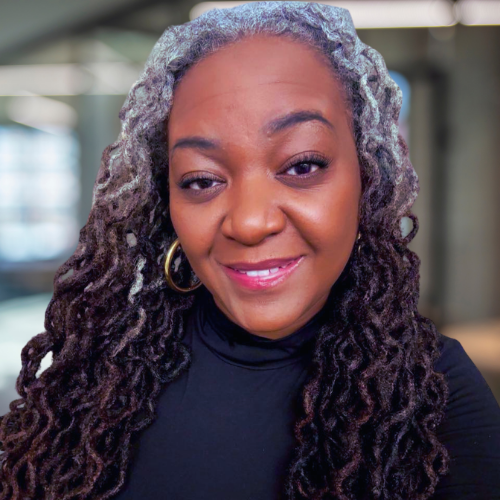
I'm not an educator.
I'm an operator.
There's a meaningful difference between someone who teaches tools and someone who has spent over two decades inside the operational infrastructure of client-facing businesses. I came up in high-touch client operations — the kind where the handoff process, the onboarding experience, and the systems behind the relationship directly determine whether clients stay, refer, and come back.
I started integrating AI into operational workflows in 2022, before it was a marketing trend. Not because it was new and exciting — because it solved a real problem I was already working on. The sequence was already in place. AI was the next logical tool in a system that was already defined.
That's the perspective I bring to every engagement. Not "here's what AI can do" — but "here's what your ops need, here's the sequence that works, and here's where AI fits into it."
The sequence most people
get backwards.
Most solopreneurs are solving the wrong problem in the wrong order. They reach for a tool — or a stack of tools — before they've documented what they actually do. Then they wonder why nothing sticks, why the automation breaks, why clients still ask the same questions.
The sequence matters more than the tools. You can't configure something you haven't documented, and you can't automate something that isn't repeatable. Operations first. Tools second. Automation third. That's the sequence that actually works.
The client experience is where most service businesses are silently losing time and revenue. Not because the work is bad — because there's no documented, repeatable system behind it.
- 01Operations FirstDocument what you actually do. Define how clients move through your process. Build the system before you build anything else.
- 02Tools SecondSelect tools that fit the process you've defined — not the other way around. The tool serves the system.
- 03Automation ThirdNow automate — because now you have something documented and repeatable worth systematizing.
I built this for my own
consulting practice first.
Before I build anything for a client, I run it myself. My consulting pipeline operates on a lean, fully connected system — from initial inquiry through signed contract to a fully onboarded client — without mandatory calls, without manual follow-ups, without me in the loop for every step.
That's the proof of concept. A one-person operation, running without friction, at a fraction of what most people spend on software.
This market is uniquely
ready for this work.
DFW has roughly 750,000–850,000 nonemployer businesses — one of the largest solopreneur markets in the country. Collin County specifically has a 24.9% work-from-home rate and a population where more than half hold a bachelor's degree or higher. These are skilled professionals who understand systems.
DFW ranked #1 for corporate headquarters relocations between 2018 and 2024. The corporate-to-entrepreneur pipeline here is one of the most active in the country — which means a continuous supply of exactly the client who already understands operational systems but hasn't built one for their solo practice.
I'm based in Frisco. I know this market. Nobody in it is doing what this practice does — AI-powered client operations built specifically for solopreneurs, at a price point that makes sense for a one-person operation.